
Early Signs of Perimenopause and When to See a Doctor
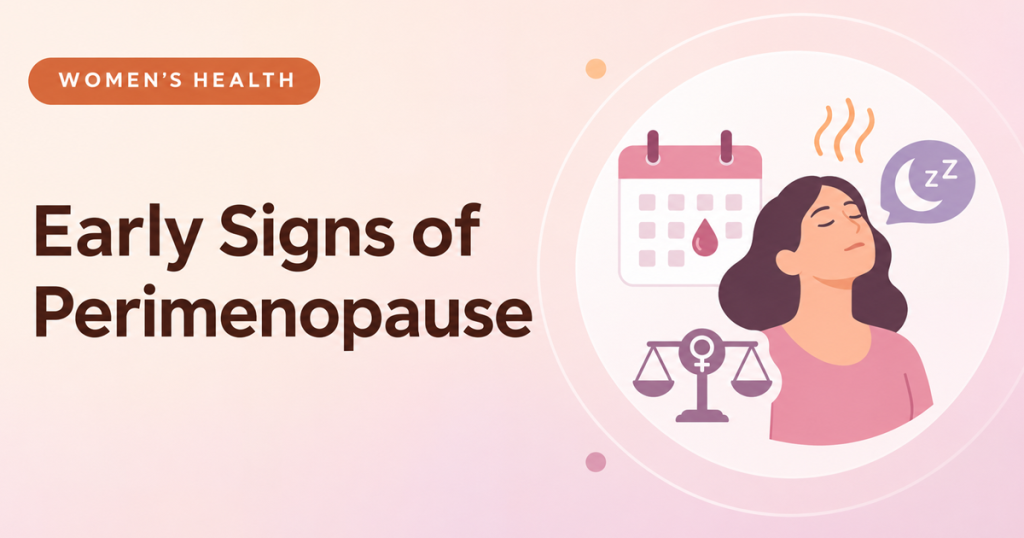
Perimenopause is the transition leading up to menopause. It can begin years before the final menstrual period, and the experience is different for every woman. For some, the first clue is a change in cycle timing. Others first notice sleep disruption, hot flashes, mood changes, vaginal dryness, or a general sense that their body is responding differently.
These symptoms can overlap with thyroid conditions, medication effects, pregnancy, stress, sleep disorders, and other health concerns. A conversation with a gynecologist can help you avoid assuming that every new symptom is “just hormones” and can clarify which evaluation or treatment options may be appropriate.
Changes in Your Menstrual Cycle
A common early sign of perimenopause is a change in menstrual pattern. Cycles may become shorter or longer, flow may become lighter or heavier, and skipped periods may occur. The pattern may continue to shift over time as ovarian hormone production fluctuates.
Even though cycle changes are common during this transition, abnormal bleeding still deserves attention. Contact a healthcare professional about very heavy bleeding, bleeding between periods, bleeding after sex, cycles that become extremely frequent, or any bleeding after menopause.
Hot Flashes Night Sweats and Sleep Changes
Hot flashes are sudden sensations of heat that may involve the face, neck, chest, sweating, or chills afterward. When they happen at night, they can interrupt sleep and contribute to daytime fatigue. Some women have sleep problems even without noticeable night sweats.
Track when symptoms occur, how long they last, what seems to trigger them, and how they affect daily life. This information can help your doctor distinguish a temporary disturbance from a pattern that needs further discussion.
Mood Focus and Energy
Some women notice irritability, anxiety, low mood, difficulty concentrating, or changes in energy during perimenopause. These experiences are real, but they are not specific to one condition. Sleep disruption, life stress, anemia, thyroid problems, and other health factors may contribute.
Tell your doctor how the changes affect work, relationships, motivation, and daily functioning. Seek immediate help for thoughts of self-harm or a mental health crisis rather than waiting for a routine gynecology appointment.
Vaginal Urinary and Sexual Health Changes
Hormonal changes may contribute to vaginal dryness, irritation, discomfort during sex, urinary symptoms, or changes in sexual desire. These topics are appropriate to discuss with a gynecologist. You do not have to accept discomfort as an unavoidable part of aging.
Because infections and other conditions can cause similar symptoms, evaluation should be based on your individual history rather than assumptions. Mention discharge, odor, itching, bleeding, pelvic pain, or urinary burning when scheduling.
When to Schedule a Perimenopause Visit
Consider an appointment when symptoms are persistent, worsening, concerning, or affecting sleep, work, relationships, sexual health, or quality of life. Bring a cycle record, symptom timeline, medication and supplement list, personal and family medical history, and the questions you most want answered.
At Compass Women’s Health in North Austin, perimenopause care starts with listening to what has changed and how it is affecting your life. Your clinician can review possible causes and discuss options based on your health history, symptoms, priorities, and goals.
Schedule a Conversation
If something about your cycle, sleep, temperature regulation, mood, or sexual health has changed, schedule a conversation with Compass Women’s Health in Austin. You do not need to identify the cause before asking for help.
Schedule an appointment with Compass Women’s Health
Medical Sources
- American College of Obstetricians and Gynecologists The Menopause Years
- National Institute on Aging What Is Menopause
- Compass Women’s Health Perimenopause Care in Austin
Medical note: This article provides general educational information and does not replace individualized medical advice, diagnosis, or treatment. Contact a qualified healthcare professional about personal symptoms or screening results.