
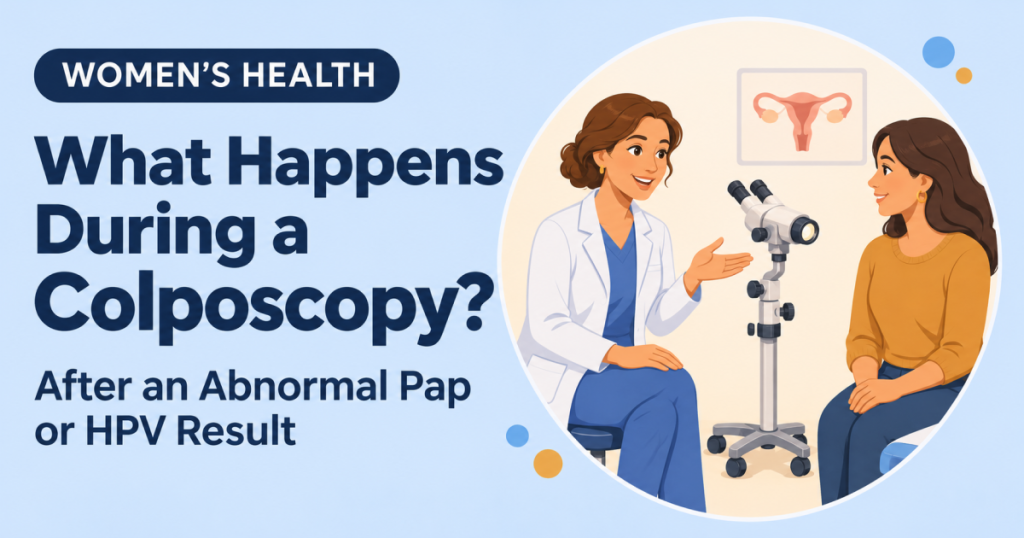
A colposcopy is an office exam that uses magnification to look closely at the cervix after certain abnormal Pap or HPV results. A small biopsy may be taken if an area looks abnormal. The test does not automatically mean cancer is present.
Why Is a Colposcopy Recommended
Cervical cancer screening may include a Pap test, an HPV test or both. An abnormal Pap result means cervical cells look different than expected. A positive high-risk HPV result means a type of HPV linked with cervical cell changes was found. Neither result by itself means you have cervical cancer.
Follow-up depends on age, the exact result and previous screening history. Some patients need repeat testing, while others need colposcopy. The purpose is to gather more information and identify whether cell changes need observation or treatment.
How to Prepare for a Colposcopy
Colposcopy is usually performed in an OB/GYN office. ACOG advises avoiding douching, tampons, vaginal medications and sex for at least 24 hours before the test. The exam is often easier to perform when you are not having your period, although you should follow the instructions from your own clinic.
Ask whether an over-the-counter pain reliever is appropriate before the appointment, especially if a biopsy may be taken. Tell your clinician if you may be pregnant, take blood thinners, have medication allergies or have questions about pain control.
What Happens During the Procedure
You lie on an exam table as you would for a pelvic exam. A speculum is placed so the cervix can be seen. The colposcope stays outside the body and provides light and magnification. A mild solution is applied to the cervix to make certain areas easier to see; it may cause brief stinging or burning.
If an area looks abnormal, the clinician may remove a very small tissue sample for a biopsy. Some people feel a pinch or cramping. Cells may also be collected from the cervical canal. You can ask the clinician to explain each step before it happens and to pause if you need a moment.
What Is Recovery Like
Without a biopsy, most people can return to normal activities right away and may notice light spotting. After a biopsy, mild cramping, bleeding or dark discharge can occur for a few days. Your clinic will explain whether to avoid tampons, sex or strenuous activity while the cervix heals.
Call your clinician for heavy bleeding, fever, severe or worsening pain, foul-smelling discharge or any symptom listed in your discharge instructions. If symptoms feel emergent, seek urgent medical care.
What Do the Biopsy Results Mean
A laboratory examines the tissue and reports whether abnormal cell changes are present and how significant they are. Some low-grade changes can be monitored because they may resolve. Higher-grade changes may need treatment to reduce the chance of progression.
The next step should be based on the biopsy result and your overall screening history. Before leaving, ask when results are expected, how you will receive them and who to contact if you have not heard back.
Abnormal Pap and HPV Follow-Up in Austin
It is normal to feel anxious while waiting for follow-up. A clear explanation can make the process easier to manage. Compass Women’s Health in North Austin provides in-person care for patients who want help understanding abnormal Pap or HPV results and their recommended next step.
Bring a copy of the report if it was completed elsewhere. Dr. Crystal Berry-Roberts, MD, MBA, FACOG can review the exact terminology and explain why repeat testing, colposcopy or another plan has been recommended.
Schedule an Appointment
Compass Women’s Health welcomes new patients for in-person gynecologic care at 4100 Duval Rd, Building 2, Suites 101–102, Austin, TX 78759. Book online through Doc Who Listens or call (512) 877-7726.
This article is for general education and does not replace personalized medical advice. Seek urgent or emergency care for severe or rapidly worsening symptoms.